A Birmingham life sciences company has described the Government’s renewed focus on genetics and early diagnosis in its National Cancer Plan as a “pivotal moment” in the fight against cancer.
Jeff Bousfield, CEO of Quinton-based Nonacus, said the plan’s commitment to expanding access to genetic testing could significantly improve survival rates and patient outcomes across the UK.
The National Cancer Plan sets out an ambitious target: by 2035, three in four people diagnosed with cancer should survive for at least five years. Central to this goal is earlier detection and the wider adoption of genomic technologies.
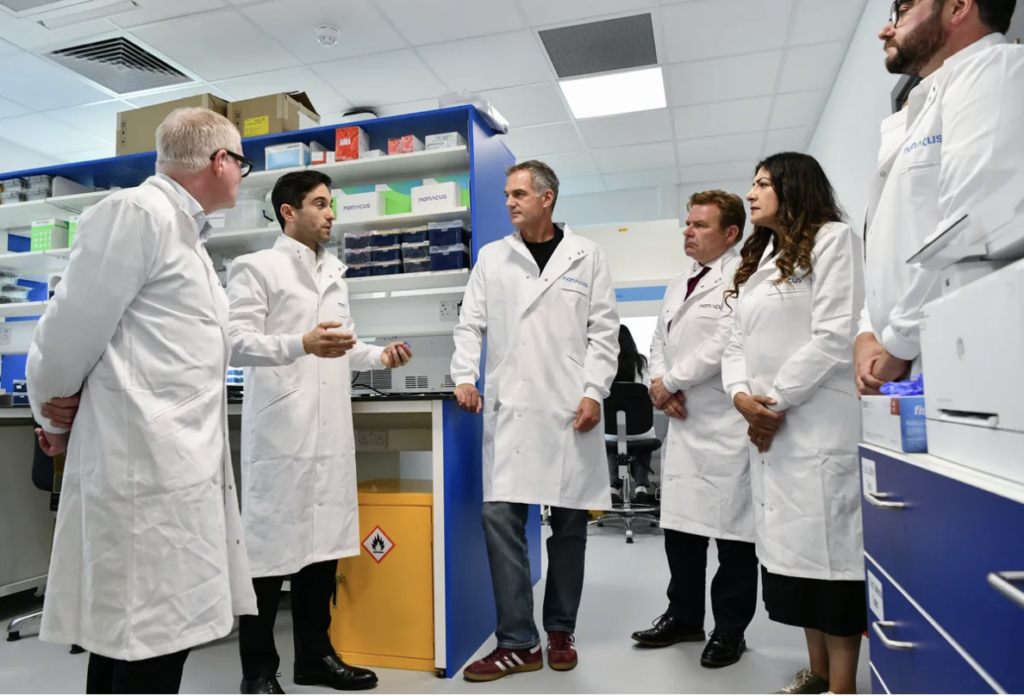
Jeff Bousfield, CEO Nonacus (second from left) with West Midlands Dignitaries. Credits: Simon Hadley
AI-Powered, At-Home Bladder Cancer Testing
Nonacus has developed AI-driven diagnostic technology designed to make bladder cancer testing faster, more affordable and less invasive.
Under its approach, patients receive testing kits at home and return urine samples for analysis. Rather than relying on traditional cystoscopy procedures, which involve inserting a camera into the bladder, the company’s method analyses DNA fragments found in urine to detect the presence of cancer and determine its type.
This genomic insight allows clinicians to assess how urgent a case is and identify the most appropriate treatment pathway. The company believes this approach could help reduce NHS waiting lists while lowering costs associated with invasive procedures.
The technology has already been trialled within the NHS. In addition, Nonacus has supported the NHS Jewish BRCA Testing Programme over the past three years, providing genetic testing for inherited cancer risk within at-risk communities.
Supporting the National Cancer Plan
Mr Bousfield said the Government’s strategy signals a turning point in embedding genetics into mainstream cancer care.
He noted that expanding access to genomic testing will allow patients to understand both inherited cancer risks and risks developed over time. According to Nonacus, scalable, accurate and rapid testing solutions will be essential if the NHS is to meet its 2035 survival targets.
The company says it is prepared to support the rollout of at-home cancer testing initiatives, aiming to improve survival rates and enhance quality of life for patients through earlier diagnosis and personalised treatment pathways.
With AI and genomic technologies increasingly shaping healthcare, firms like Nonacus are positioning Birmingham as a growing hub for medical innovation and precision diagnostics.