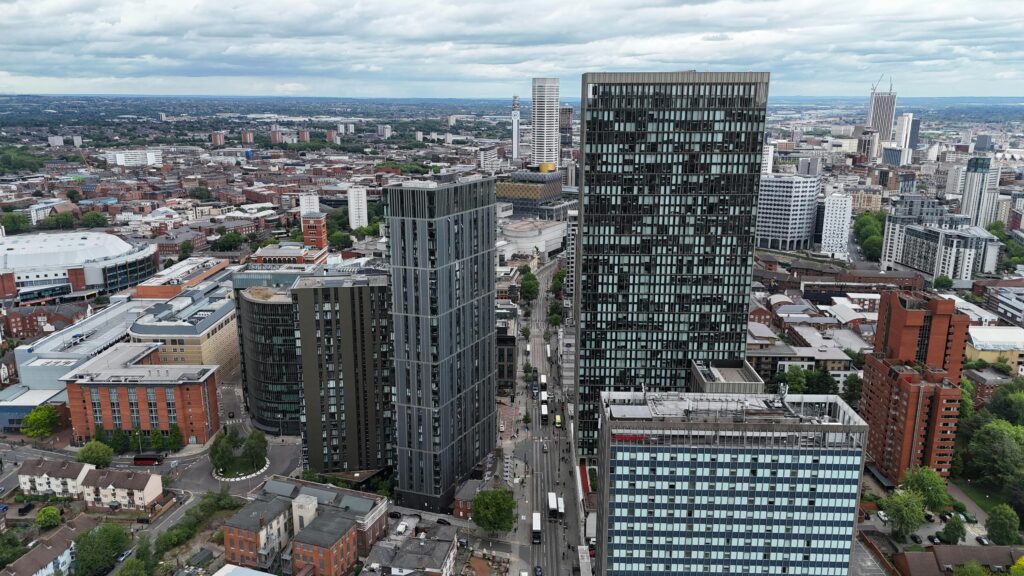
Birmingham has never stood still. Born out of the Industrial Revolution, the city has repeatedly reinvented itself to meet the needs of new economies. Today, that tradition continues as Birmingham adapts its built environment to support an AI-driven, technology-led future — one shaped by shifting education models, evolving workforce expectations and changing real estate economics.
At the heart of this transformation lies a critical question: can the city’s physical infrastructure keep pace with the rapid evolution of technology and talent?
Education, AI and the Infrastructure Gap
Birmingham’s universities are at the frontline of preparing the next generation for an AI-powered economy. Student demand reflects this shift. Enrolment in computing-related subjects, including artificial intelligence, has surged sharply in recent years, mirroring national trends driven by the mainstream adoption of advanced digital tools and large language models.
Yet while student numbers are rising, the physical footprint of higher education is not. By the end of 2025, there was no new education or research floorspace under construction in the city. This pause comes at a time when many universities across the UK are under financial pressure, with a growing proportion forecasting operating deficits. Rising costs and funding constraints are forcing institutions to squeeze more value from existing estates rather than expand them.
Hybrid learning models partly explain this shift, but AI-focused education brings specific infrastructure demands. High-performance computing, data-heavy research and advanced digital teaching require resilient power capacity and robust connectivity. Without investment in these foundations, there is a risk that physical infrastructure lags behind academic ambition.
The launch of the Birmingham Knowledge Quarter (B-KQ) in 2025 offers a potential turning point. Through coordinated place-making, partnerships and infrastructure investment, B-KQ could help bridge the gap between talent development and the spaces needed to support it, positioning the city to compete more effectively for students, researchers and innovation-led businesses in the years ahead.
Student Living: Strong Demand, Growing Complexity
Rising student numbers — particularly in technology-focused disciplines — are reshaping demand for purpose-built student accommodation (PBSA). New developments increasingly prioritise fast, reliable connectivity, flexible study areas and communal spaces that support collaboration and digital learning.
While construction levels eased slightly compared with record highs seen previously, the overall pipeline remains substantial, with thousands of student beds consented or cleared for development. This points to continued confidence in Birmingham’s student market.
However, delivery risks are mounting. Building safety regulations, competition from build-to-rent and co-living schemes, and ongoing viability pressures linked to cost inflation and programme delays are all creating headwinds. Many schemes fall within the Higher Risk Buildings category, adding complexity and time to delivery. How these challenges are navigated will be critical to meeting future demand.
From Campus to Workplace: The Next-Gen Office
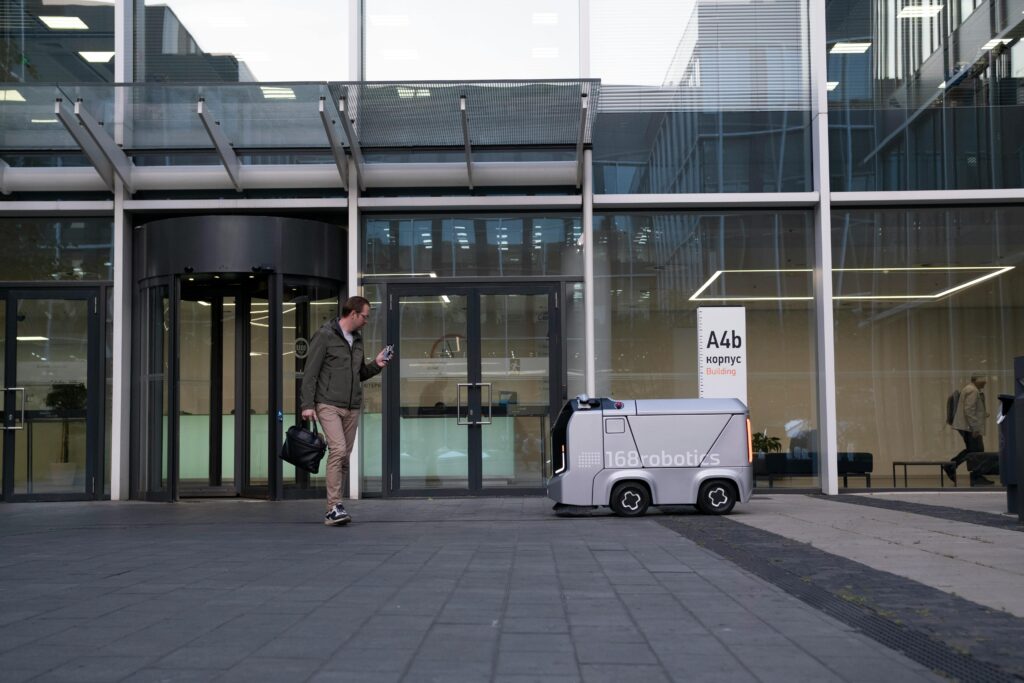
Graduates emerging from Birmingham’s universities are likely to expect more from their workplaces than previous generations. Smart technology, data-rich environments and seamless digital connectivity are no longer optional extras — they are baseline requirements for AI-enabled work and collaboration.
Birmingham is actively positioning itself as a destination for emerging technology businesses. Recent investments and expansions by major firms in digital infrastructure, coding, AI and financial technology signal growing confidence in the city’s talent pipeline. These commitments also underpin demand for modern office environments capable of supporting advanced operations.
While viability challenges have slowed speculative office development, refurbishment of existing stock has emerged as a practical and sustainable solution. Upgrading older buildings can deliver high-quality workspace without the financial risk associated with new-build schemes. Looking ahead, the next wave of major office developments is likely to be occupier-led, with corporate investment providing certainty around design, delivery and long-term occupation.
Such moves — whether from UK-based firms relocating from London or international businesses establishing a first UK presence — could play a decisive role in retaining graduates and strengthening Birmingham’s reputation as a long-term base for talent and enterprise.
Looking Ahead: Building for the Next Generation
Birmingham’s built environment sits at a pivotal moment. The city’s growing pool of tech-savvy talent is generating demand for smarter, more connected and more sustainable places to live, learn and work. At the same time, financial pressures and regulatory complexity are forcing difficult decisions across education, residential and commercial real estate.
The challenge now is alignment. For Birmingham to fully capitalise on its next generation, real estate, construction, education and business investment must move in step. If the city can match its ambition with delivery, investing in infrastructure that supports innovation while adapting existing assets creatively, it stands well placed to secure its future as a leading UK hub for talent, technology and growth.
With bold choices and coordinated action, Birmingham’s long tradition of reinvention looks set to continue.